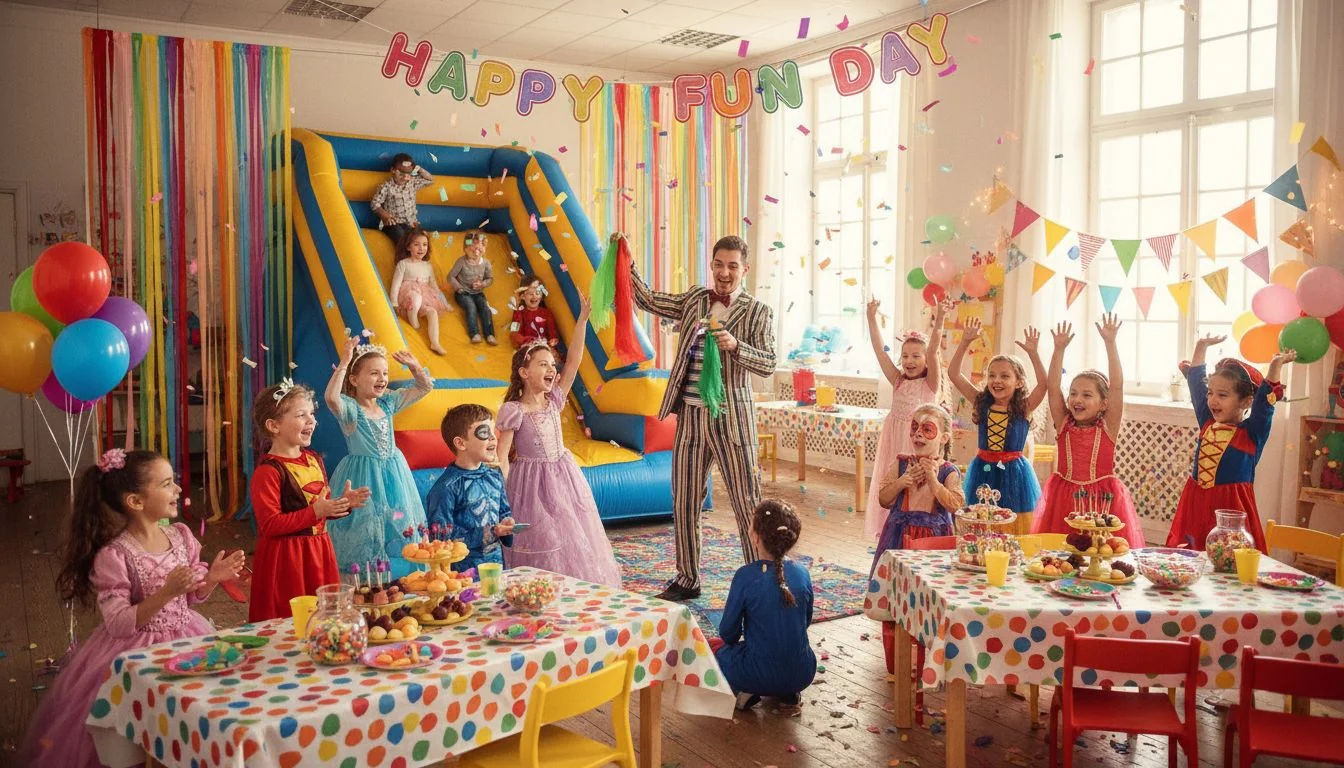
Roughly half the birthdays in any class fall between November and March, which in Toronto means planning around the weather rather than hoping about it. An indoor party is not a downgrade — it just needs different thinking, because the one thing you lose is the backyard where children burn off energy on their own.
Replace the running, do not ignore it
This is the whole problem in one line. Outdoors, children regulate themselves. Indoors, unless you give them something physical, the energy comes out as noise and eventually as an argument in the hallway. Every winter party that works has something in it that makes them move.
- Obstacle course. Cushions, chairs, masking tape on the floor, a timer. Costs nothing and children will repeat it for forty minutes trying to beat their own time.
- Dance games. Freeze dance, limbo, musical statues. Reliable from three to nine and needs only a speaker.
- Balloon keep-up. One balloon, one rule: it cannot touch the floor. Absurdly effective and quiet enough for an apartment.
- Indoor bounce house. If the ceiling allows it, this single item solves the energy problem for the entire party.
Winter-specific themes
- Glow party. Dark comes at half past four, which for once is an advantage. Blinds down, UV paint, glow sticks, neon plates. The room transforms completely and the photographs are excellent.
- Hot chocolate bar. Marshmallows, sprinkles, whipped cream, three syrups, and mugs the children fill themselves. Works as the food centrepiece rather than a side.
- Winter wonderland. White and silver, paper snowflakes made at the party rather than bought, and cotton wool on the table.
- Cosy movie afternoon. Blanket forts, popcorn, a film they chose. Best for a smaller group and a birthday child who does not want a loud party.
- Indoor camping. A tent in the living room, torches, s’mores assembled in the oven, a story read in the dark.
The coat problem
Twelve children arriving in snowsuits, boots and mittens takes fifteen minutes and produces a puddle. Plan for it: a mat or towels by the door, a designated room or rail for coats — not the bed everyone throws things on — and a basket for mittens, which otherwise leave in the wrong pairs. Ask on the invitation for indoor shoes or slippers, and have a few spare pairs of socks for the children who arrive without.
Build fifteen minutes of arrival time into the schedule instead of pretending it does not exist. That first activity should be something latecomers can join mid-way without anyone explaining the rules again.
Food that suits the season
Warm food works better in winter and is easier than it sounds. A tray of mini pizzas, a slow cooker of mac and cheese, or soup in cups for older children. The hot chocolate bar doubles as an activity. Keep something cold available too — a room with fifteen children in it gets hot faster than you expect, however cold it is outside.
Booking around the season
December is the hardest month to book anything. Venues, performers and weekend slots go early, and they compete with every office party in the city. If the birthday falls in the second half of December, either book six to eight weeks out or move the celebration to January, when everything is available and cheaper. Children largely do not mind, and a party in the flat stretch after the holidays is often better attended.
Have a weather plan
A snow day cancels a party as effectively as illness does. Decide in advance what happens if the forecast turns: a cut-down version at home, a postponement to the following weekend, or a call made by a set hour on the morning. Tell parents on the invitation how they will hear. A single message to a group chat at nine in the morning is far better than twelve separate phone calls at eleven.